 Miles Davis was one of the most influential musicians and style icons of the 20th century, and a father figure to many. But who influenced him?
(A shorter version of this article was published on Everything Jazz.)
He was human, all too human, and some of his personal relationships were difficult, and he may not have behaved well at times.
But when we assess Miles’s life, we also see that he had many mentors, characters who shaped his attitudes to music, style and politics.
Drawing a parallel with Stanley Kubrick’s famous film ‘2001: A Space Odyssey’, maybe we can see them as Miles’s ‘monoliths’, characters who shunted him into his next phase of evolution, showing him the way forward.
And though Miles changed music several times, and became a father figure to many (John McLaughlin, James ‘Mtume’ Heath, Darryl Jones etc. etc.), he also needed guidance and confirmation from various people. But who were they?
Miles Davis II
Miles’s father was born in 1900, and became a highly respected dentist after studying at Northwestern University in Evanston, Illinois. He became a pillar of his community in East St. Louis, and bought Miles a trumpet for his 13th birthday. In his autobiography, Miles recalled a vital piece of advice his father gave him which he never forgot: ‘You hear that bird outside the window? He’s a mockingbird. He don’t have a sound of his own. He copies everybody’s sound, and you don’t want to do that. You want to be your own man, have your own sound. That’s what it’s really about.’ Miles was heartbroken when his father passed away in 1962.
Elwood Buchanan
Reportedly Miles’s mother would have preferred her son to take up the violin, but Miles was instinctively drawn to the illustrious St. Louis trumpet sound. Elwood Buchanan was part of that legacy and also Miles’s teacher at Lincoln High School (and a client and friend of Miles Sr.). Mr Buchanan’s first major coup was advising Miles to switch from cornet to trumpet. He also urged Miles to drop his broad, Harry James-style vibrato, and rather focus on alternating between long, unsentimental notes and staccato, percussive ideas, both of course key facets of his future style.
Dizzy Gillespie/Charlie Parker
Miles begins his autobiography with a glowing appreciation of seeing Dizzy Gillespie and Charlie Parker play together, and both proved to be absolutely invaluable to Miles’s development once he’d found them upon his arrival in New York during 1944. Dizzy took Miles under his wing, cooking him dinner with his wife Lorraine and getting him to tag along during errands around the city. Miles even joined Dizzy’s Big Band for a few weeks in April 1947. Meanwhile, when Miles joined Charlie Parker’s quintet in 1945, Bird constantly encouraged the timid Miles and never gave up on him, even when confidence was low: ‘He treated me like his son. He used to make me try to play. He used to lead me on the bandstand,’ Miles told Nat Hentoff in 1955. Parker also played tenor sax on Miles’s first date as a bandleader on 14 August 1947.
Gil Evans
Miles loved the Canadian arranger and composer from the day they met in 1947 until Gil’s death in 1988. Gil would show Miles paintings, and ask his opinion on classical recordings he hadn’t heard. ‘He was the just the kind of guy you loved being around, because he would see things that nobody else saw,’ Miles said in his autobiography. Miles and Gil’s collaborations changed music a few times.
Juliette Greco/the French scene
Miles’s first visit to Paris in 1949 liberated him in many ways. He met Pablo Picasso and Jean-Paul Sartre, and fell in love with the actress Juliette Greco. ‘It was the freedom of being in France and being treated like a human being, like someone important,’ he reported in his autobiography. Miles would continue his love affair with France, and made a point of visiting his friend James Baldwin in Saint-Paul-de-Vence whenever he could.
Bill Evans
Miles learned a lot from all of his pianists, but Evans seems to have left the most mark. Miles reported: ‘I used to call Bill up and tell him to take the phone off the hook…and play for me because I loved the way he played.’ Miles also claimed in his autobiography that he planned Kind Of Blue around Evans’ piano playing. In 1958, he told Nat Hentoff: ‘Boy I’ve sure learned a lot from Bill Evans. He plays the piano the way it should be played. He plays all kinds of scales, can play in 5/4 and all kinds of fantastic things.’ Evans also introduced Miles to the music of Rachmaninov, Ravel and Michelangeli.
Frances Taylor
They first met in the early 1950s while Frances was part of The Katherine Dunham Dance Company. Frances was an evolved person, elegant and beautiful, well-travelled, a wide reader and speaker of several languages. As they became a married couple later in the decade, Frances nurtured Miles’s nascent love of dance and “world” music, taking him to a performance of The Ballet Africaine and later appearing in ‘Porgy and Bess’, ‘Carmen Jones’ and ‘West Side Story’. Their combination of music, movement, rhythm, colour and complexity would profoundly influence Miles’s future artwork and music. Frances featured on the cover of Miles’ 1958 album Someday My Prince Will Come.
Tony Williams
The young drummer was over 20 years Miles’s junior when he officially joined the quintet in 1964, but it’s arguable that no other musician had such an impact on Miles. Tony urged Miles to keep his chops up and his ears open, and revolutionised his concept of rhythm – ‘If you don’t have knowledge of time changes, he’ll lose you,’ Miles told Arthur Taylor in the classic book ‘Notes And Tones’. Miles reported in his autobiography: ‘There ain’t but one Tony Williams when it comes to playing the drums. There was nobody like him before or since.’
Betty Mabry
Miles met Betty in spring 1968. She was a vital young presence on the New York scene, a model, club owner and songwriter. She encouraged Miles to modernise his wardrobe, embrace funk and soul music more and also introduced him to Sly Stone and Jimi Hendrix. They married on 30 September 1968, and Miles named a song after her: ‘Mademoiselle Mabry’, from the Filles De Kilimanjaro LP which also bears a photo of Betty. She would later record her own influential albums under the name Betty Davis, but would separate from Miles by the end of 1969.
Cicely Tyson
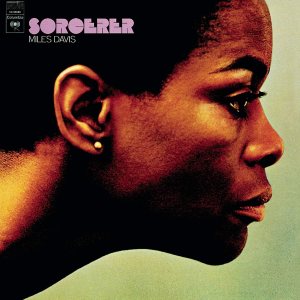
Miles first met Tyson in 1966 or 1967. She was a groundbreaking actor and activist, a dynamic, serious presence who stayed a confidante during Miles’s hell years of the late 1970s. In August 1979, the composer Paul Buckmaster witnessed Miles passing out during a sweltering summer night in his Manhattan townhouse. Fearing for his life, Buckmaster contacted Miles’s sister Dorothy, who in turn contacted Cicely. By all accounts Tyson seems to have been the catalyst for his recovery and ‘80s comeback, distancing him from drugs and drink and turning him on to health foods and acupuncture. ‘All of a sudden I started thinking clearer,’ Miles reported in his autobiography. It seems Cicely was also responsible for Miles’s love of doodling and drawing: she bought him his first sketch pads. They married in November 1981 and stayed together until 1988. Cicely also graced the cover of the 1967 album Sorcerer.
Jo Gelbard
Miles met 34-year-old artist and sculptor Gelbard as he came out of the elevator in his New York building sometime in 1984, when he was at a very low ebb. She would become his final partner and lover, and the two would spend days working on art together (they would collaborate on the Amandla cover, which featured the tribute tune “Jo-Jo”, and also produce the artwork that formed a backdrop to his famous Paris concert on 10 July 1991). She also introduced Miles to the work of Jean-Michel Basquiat, a huge influence on his drawing and stage presentation.

