 Thelonious Monk was one of jazz’s great entertainers. But good Monk cover versions are generally as rare as hen’s teeth.
You could probably count on one hand the interpretations that have really captured Monk’s playful spirit and/or created music of lasting value.
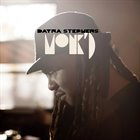
But now we can add Dayna Stephens’ recent album Monk’D to that small, illustrious list. Best known as a tenor saxist, the NYC-based Stephens instead picks up the acoustic bass for this project which also gathers Ethan Iverson on piano (one of Monk’s pianos, according to the press release), Stephen Riley on tenor and Eric McPhearson on drums.
Recorded on 24 March 2022 at the legendary Van Gelder Studio in Englewood Cliffs, the album focuses mainly on lesser-known Monk compositions – a big part of its success. Melodies are played completely faithfully but there are very creative, non-irritating rhythmic and structural embellishments.
The opening whole-tone scale on ‘Brake’s Sake’ alerts one that this project is going to work. Thereafter no one is in a great hurry to impose themselves. The instruments are artfully placed across the stereo spectrum (fascinatingly, each tune seems to necessitate a different stereo set-up).
Riley’s soft approach on the horn is closer to Lee Konitz than Charlie Rouse. There are no tuning problems for him either, unlike Rouse on a few of the later Monk albums. Meanwhile Iverson mainlines the sheer delight with which Monk strung together seemingly contradictory ideas.
‘Humph’ shunts amusingly between double and half-time, with Iverson’s ambiguous chords prodding Riley into a pleasingly obtuse solo with interesting rhythmic displacements, then echoed by both Stephens and McPhearson during their solos.
‘Coming On The Hudson’ is a lovely reworking, with ingenious comping from drums and piano during Stephens’ short bass solo. There’s a ‘floating’ feeling to the whole piece – you may even find yourself giggling along.
‘Just You And Me Smoking The Evidence’ cleverly shows how the standard ‘Just You, Just Me’ underpinned Monk’s ‘Evidence’ while the ballads ‘Ruby My Dear and ‘Ugly Beauty’ are played relatively straight, though Iverson begins the former with some brave, almost serialist colours.
‘Stuffy Turkey’ throws in some funny chromatic key changes and for some reason is in mono – but it just feels right. ‘Hornin’ In’ is also played straight with loads of space from the rhythm section during Iverson’s solo.
Surprisingly Monk’D didn’t make it into Down Beat’s ‘Albums Of 2025’ list (but is reviewed very favourably in the January 2026 edition – Ed.). A shame because for this writer it’s one of the most enjoyable listens of the last few years.
Danya Stephens spoke to soundsofsurprise about Monk’D:
Can you talk about how this project came about, and your relationship with Monk’s music?
Monk’s music was presented to me by my father when I was young, before playing saxophone. I’ve always loved his music and love how identifiable and personal he was as a player and composer. Aside from attending a Monk-themed ensemble at Berklee College of Music, I also attended what was then called The Thelonious Monk Institute of Jazz for two years where I was immersed even more in the master’s works.
How did you recruit the players? The producer Mark Weiss wanted me and Ethan to record together and Ethan and I quietly agreed that we wanted to focus on Monk. I chose Stephen on sax because he has one of my favorite sounds ever on the instrument, and I knew from his recordings that he loved Monk as well. Eric was an easy choice for me and Ethan and I had played many times together in other configurations which always felt great regardless of the repertoire.
How did you come to play bass on this? Did you ever consider approaching Monk’s music from a saxophone perspective? I’ve played Monk music mostly on sax and for this one I wanted a different perspective and timbre for the saxophone and the whole sound of the band for that matter. My instincts told me from the beginning told me it was the right choice. I also, for good reason, tend to focus more on the groove when I play bass and I really wanted these arrangement to have a certain hump that I felt me and Eric could achieve uniquely.
It’s amazing that you recorded everything in a day – did you get any rehearsal time beforehand?
I only rehearsed with Stephen on the day before we recorded. I sent the music a couple weeks ahead of time. I had full trust these guys would knock it out of the park. We finished before the sun went
down.
Can you tell me a bit more about the ‘vintage’ instruments used, as per the Down Beat review, and Ethan using a piano once played by Monk? My bass was equipped with gut strings for a warmer, woodier sound which I prefer in general since this recording. Stephen played and has long played an old Beuscher sax which can have a beautiful wide and warm sound that Stephen displays here effortlessly. The piano that Monk played was in the room while we recorded (Down Beat may have gotten that wrong) and we saw the etchings of Monk’s pen on the lid of that piano when he was correcting music that went through the paper he was writing on. Rudy (Van Gelder) apparently wasn’t happy about that! But it was a source of inspiration for us.
There are fascinating bits of half-time and double-time, and ‘floating’, almost rubato sections – were these planned out before time or did they generally happen spontaneously? Those were part of my arrangements. The band made those shifts happen so naturally.
I love the way the instruments are placed around the stereo spectrum in the mix, and each tune seems to call for a different approach (a nice tribute to Rudy VG too…). Were these very conscious decisions? They were very conscious decisions that few have recognised. I was torn for months on which panning I wanted for this recording then it dawned on me, after listening back to various Monk recordings, to allow the song to dictate the panning. Those decisions were made in a matter of minutes once that idea came to light.
 Sounds Of Surprise